Your Kruger Park Self-Drive Safari Guide
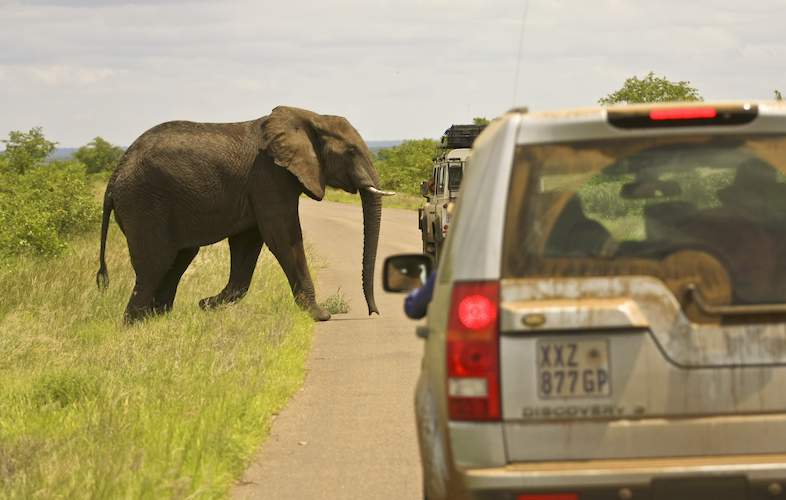
Your Kruger Park Self-Drive Safari Guide: A self-drive safari in Kruger National Park offers one of the most rewarding and flexible wildlife experiences in Africa. Kruger’s excellent road network, clearly marked routes, and abundant wildlife allow travelers to explore the park at their own pace while enjoying close, meaningful encounters with nature. Whether you are a first-time safari visitor or a returning wildlife enthusiast, self-driving places you in full control of your safari adventure.
This guide explains how self-drive safaris work in Kruger, how to plan them well, and how to maximize wildlife sightings safely and responsibly.
Why Choose a Self-Drive Safari in Kruger National Park
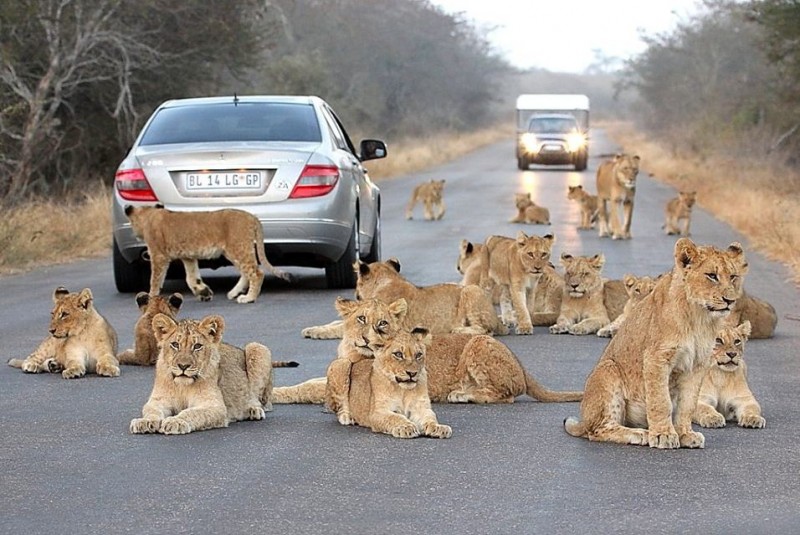
Kruger National Park suits self-drive travel better than almost any other major safari destination. Wildlife viewing happens primarily from vehicles, and animals move freely across landscapes that roads carefully traverse. Visitors can stop when wildlife appears, wait patiently at sightings, and choose their own routes without pressure.
Self-driving also allows flexibility. Travelers decide when to start their day, how long to stay at a sighting, and when to return to camp. This independence creates a relaxed safari rhythm that appeals to families, photographers, and travelers who enjoy exploration.
Understanding Kruger’s Road Network
Kruger National Park maintains an extensive network of tarred and gravel roads. Tar roads connect major gates, rest camps, and high-traffic wildlife areas. These roads suit all vehicle types and provide smooth driving conditions.
Gravel roads branch off into quieter sections of the park and often deliver excellent wildlife encounters due to lower traffic. These roads move through riverbeds, plains, and woodland areas where predators and herbivores regularly appear. Driving slowly on gravel roads increases sightings and improves safety.
Roads are clearly numbered and marked on park maps, making navigation straightforward even for first-time visitors.
Planning Your Daily Game Drives
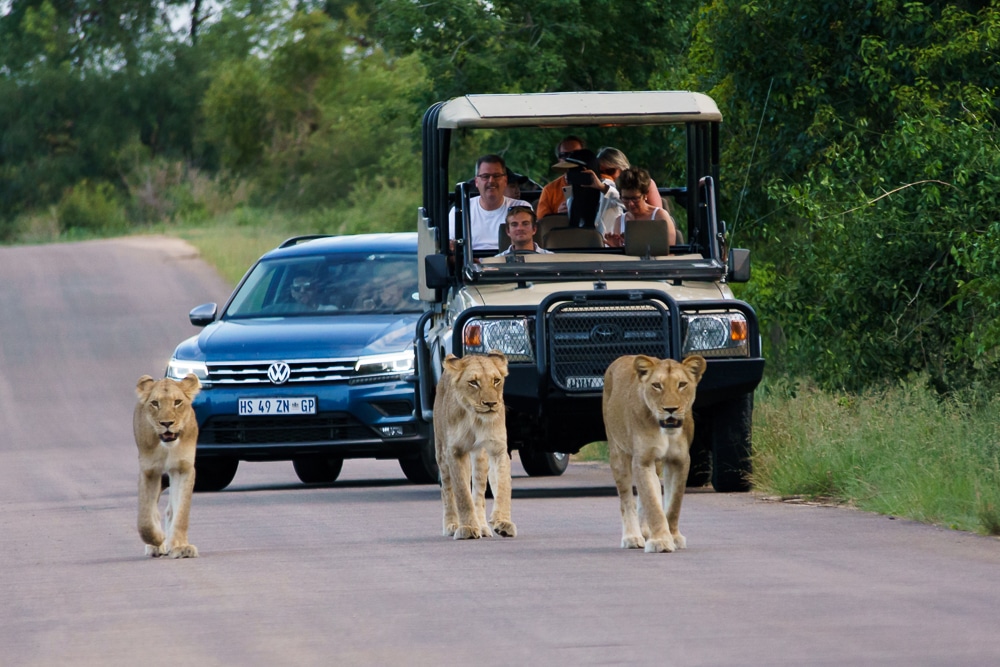
Successful self-drive safaris rely on timing, patience, and route planning. Early morning game drives produce the best results. Wildlife remains active in cooler temperatures, predators return from night hunts, and birds show increased movement.
Late afternoon drives also deliver strong sightings, especially near waterholes and rivers as animals prepare for evening activity. Midday hours tend to be quieter, making this a good time to rest at camp, enjoy lunch, or visit viewpoints close to accommodation.
Planning routes around rivers, dams, and known water sources increases the chances of wildlife encounters, particularly during dry months.
Best Areas for Self-Drive Safaris
Southern Kruger offers the highest wildlife density and remains ideal for self-drive safaris. Areas around Skukuza, Lower Sabie, Berg-en-Dal, and Crocodile Bridge deliver frequent sightings of lions, leopards, elephants, and rhinos.
Central Kruger provides open savannah landscapes and strong predator activity, especially around Satara. This region suits travelers seeking classic African scenery with large herds and hunting predators.
Northern Kruger feels quieter and more remote. It suits experienced self-drive travelers interested in birdlife, rare antelope species, and fewer vehicles on the roads.
What Vehicle Works Best for a Self-Drive Safari
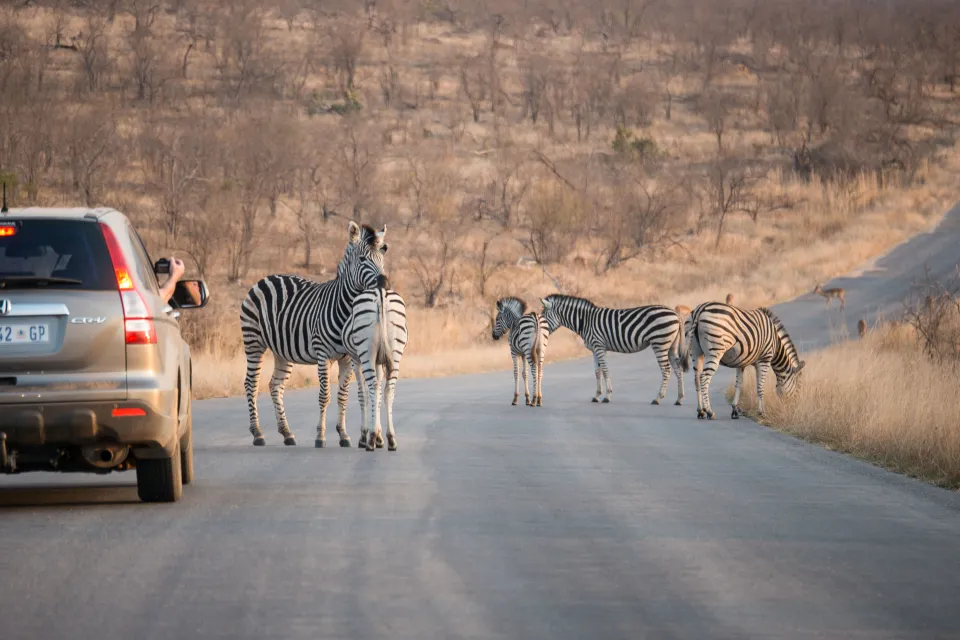
A standard sedan works well on Kruger’s tar roads and many gravel routes. Higher-clearance vehicles improve visibility and comfort on gravel roads but remain optional rather than essential. Four-wheel drive is unnecessary for general park travel.
Regardless of vehicle type, slow driving improves wildlife spotting and safety. Staying alert near river crossings, wooded areas, and bends increases chances of surprise sightings.
Wildlife Viewing Etiquette and Safety
Self-drive safaris require responsible behavior. Drivers must remain inside vehicles at all times except at designated rest camps, picnic sites, and viewpoints. Speed limits protect wildlife and reduce accident risk.
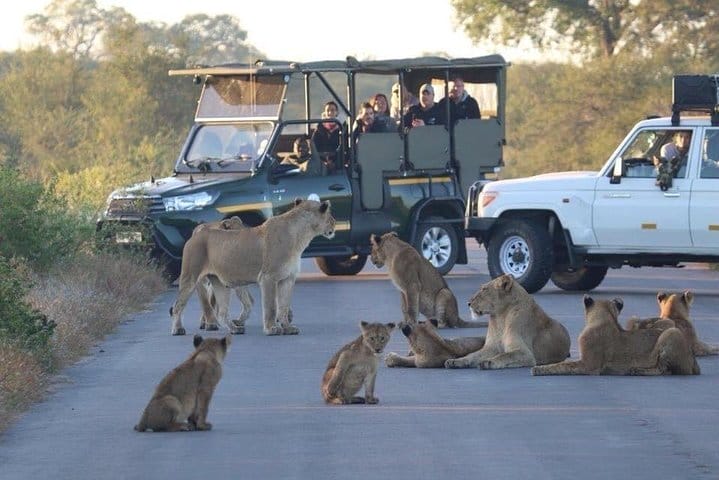
At sightings, drivers should position vehicles considerately, avoid blocking animal movement, and keep noise to a minimum. Patience often rewards drivers with longer and more natural wildlife interactions.
Animals always have right of way, and reversing or waiting calmly ensures safety for both people and wildlife.
Using Rest Camps and Picnic Sites
Rest camps play an important role during self-drive safaris. They provide fuel, food, restrooms, and opportunities to rest between drives. Camps such as Skukuza, Lower Sabie, Satara, Letaba, and Olifants also offer scenic viewpoints where wildlife appears close to camp boundaries.
Picnic sites allow travelers to exit vehicles safely and enjoy meals in fenced areas. These stops help break long drives and provide time to relax while remaining immersed in the park environment.
Navigation, Maps, and Information
A detailed Kruger map helps with route planning and understanding distances between camps and gates. Many travelers combine paper maps with offline digital navigation to track locations, waterholes, and picnic sites.
Notice boards at camps and gates often display recent wildlife sightings reported by rangers and visitors. These boards offer helpful clues about animal movement patterns without guaranteeing sightings.
Best Time for a Self-Drive Safari
Dry winter months from May to September offer the best self-drive conditions. Wildlife concentrates around water sources, vegetation remains sparse, and temperatures stay comfortable during the day. Visibility improves, and long drives feel more pleasant.
Summer months provide lush landscapes, baby animals, and excellent birdlife. Heat and dense vegetation require slower pacing and shorter drives, especially during midday.
Final Thoughts
A self-drive safari in Kruger National Park offers freedom, authenticity, and deep connection to the natural world. With careful planning, patient driving, and respect for wildlife, travelers experience unforgettable moments shaped by chance encounters and quiet observation.
Kruger rewards those who move slowly, watch carefully, and allow the bush to reveal itself. A self-drive safari here does not just show wildlife; it teaches travelers how to see it.