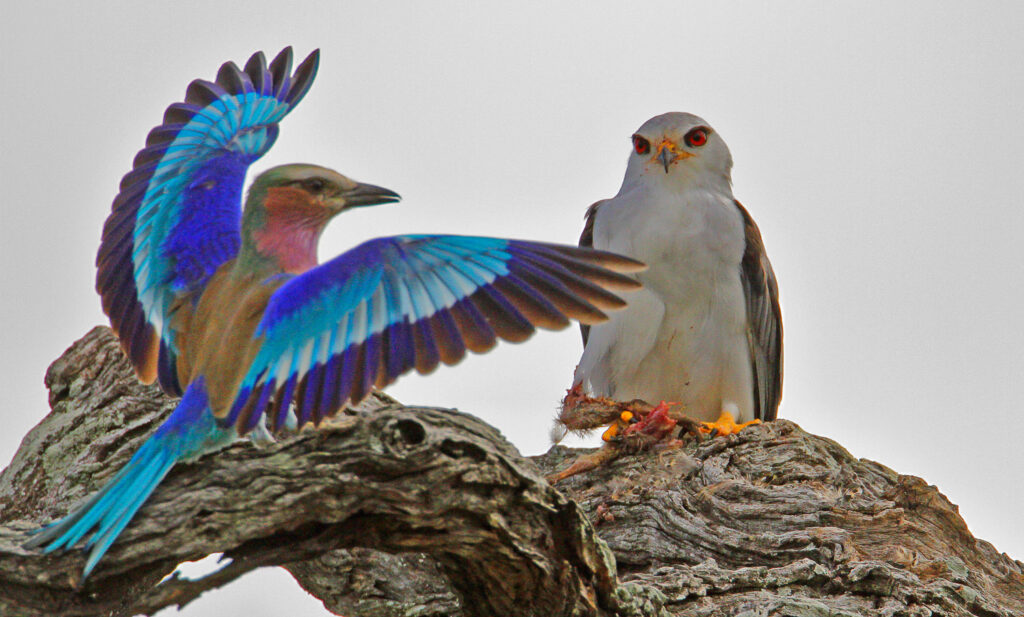
Kruger National Park Birding Guide.
Kruger National Park Birding Guide: Kruger National Park ranks among the finest birding destinations in Africa. With more than 500 recorded bird species, the park offers exceptional diversity across varied habitats that include riverine forests, open savannahs, woodlands, dams, and seasonal wetlands. Birding in Kruger rewards both casual observers and dedicated birders, as sightings range from colorful garden species inside rest camps to rare raptors and elusive specials deep in remote regions.
Birdlife in Kruger remains excellent throughout the year, but seasonal changes strongly influence species presence, behavior, and visibility.
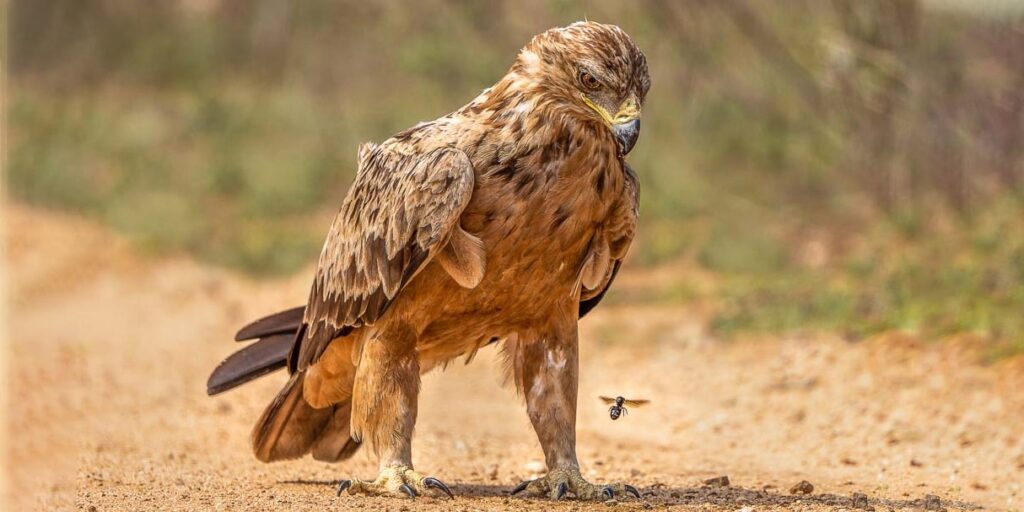
Why Kruger National Park Is a Premier Birding Destination.
Kruger’s vast size and habitat diversity create ideal conditions for an extraordinary range of bird species. Large rivers such as the Sabie, Crocodile, Olifants, Letaba, and Luvuvhu support waterbirds, kingfishers, herons, storks, and fish eagles. Open grasslands attract bustards, rollers, larks, and raptors, while woodlands host hornbills, barbets, woodpeckers, and migratory songbirds.
Because the park allows self-drive exploration, birders enjoy freedom to stop, observe, and spend time at sightings without pressure. Many species appear along roadsides, river crossings, and even within rest camps, making birding accessible and relaxed.
Best Time for Birding in Kruger National Park.
Birding in Kruger remains rewarding year-round, but summer stands out as the peak season. From November to March, migratory birds arrive from Europe, Asia, and other parts of Africa. These months bring breeding plumage, active calling, and dramatic displays that delight birders.
Summer rains create temporary wetlands that attract waterbirds and increase insect activity, which in turn draws aerial feeders such as swallows, bee-eaters, and swifts. Bird diversity reaches its highest point during this period.
Winter birding from May to August offers excellent visibility due to sparse vegetation. While migratory species leave, resident birds remain active, and raptors become easier to spot as they perch in leafless trees and patrol open landscapes.
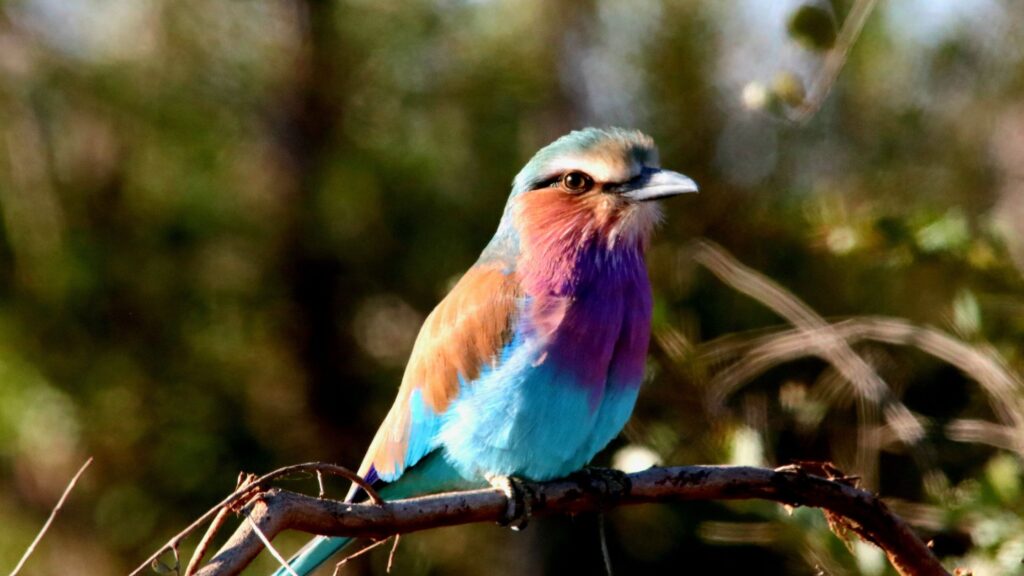
Key Birding Regions in Kruger National Park
Southern Kruger delivers strong bird diversity combined with high accessibility. River systems near Skukuza, Lower Sabie, and Crocodile Bridge support fish eagles, kingfishers, sunbirds, and herons. This region suits beginners and casual birders who want variety without long drives.
Central Kruger provides open savannah habitats around Satara and surrounding plains. These areas attract raptors, bustards, kori bustards, secretary birds, and ground hornbills. The mix of grassland and scattered trees makes bird identification easier.
Northern Kruger stands out as the premier birding region for serious enthusiasts. The far north around Punda Maria and Pafuri hosts unique species rarely found elsewhere in South Africa. Riverine forests along the Luvuvhu River support specials such as Pel’s fishing owl, narina trogon, and various tropical species. Lower visitor numbers and rich habitats create outstanding birding conditions.
Birding From Rest Camps and Picnic Sites
Birding in Kruger does not require constant driving. Many rest camps serve as excellent birding locations in their own right. Camps located along rivers or near dams attract waterbirds, woodland species, and nocturnal birds.
Early mornings and late afternoons inside camps often produce excellent sightings, especially near fence lines, riverbanks, and trees around accommodation units. Picnic sites near rivers and dams also provide productive birding opportunities while allowing safe vehicle exit.
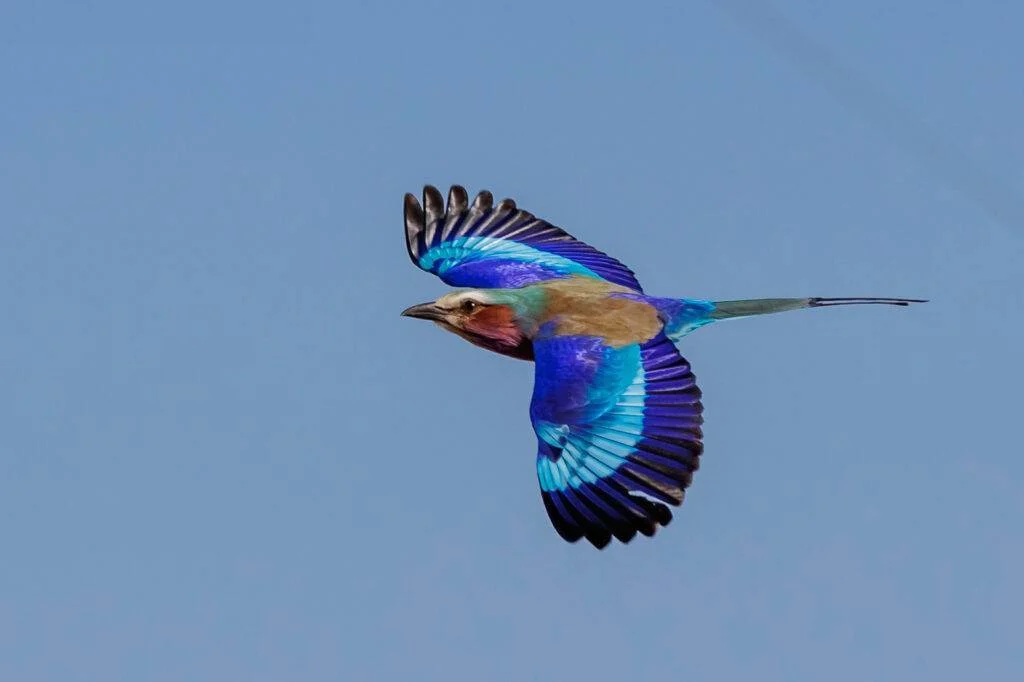
Self-Drive Birding in Kruger National Park
Self-drive birding allows complete control over pace and focus. Driving slowly, stopping frequently, and listening for calls increase sightings dramatically. River crossings, low-water bridges, and dam loops offer particularly strong birding.
Early morning drives capture peak bird activity, while late afternoon light enhances visibility and photography. Midday hours suit scanning water bodies and resting raptors.
Patience plays a key role. Many species reveal themselves through calls or subtle movement rather than obvious displays.
Bird Photography in Kruger National Park
Kruger offers excellent bird photography opportunities due to the proximity of birds to roads and camps. A moderate telephoto lens works well for most situations, as many species tolerate vehicles closely.
Riverine habitats provide strong backgrounds, while open plains allow clean compositions for larger birds. Early morning and late afternoon light create softer tones and better contrast.
Staying still and allowing birds to approach often yields better results than constant movement.
Birding Ethics and Responsible Observation
Responsible birding protects both birds and habitats. Staying inside vehicles outside designated areas ensures safety and reduces disturbance. Avoid playing bird calls excessively, as this stresses birds and disrupts natural behavior.
Quiet observation and patience produce the most rewarding sightings while preserving the integrity of Kruger’s ecosystems.
Who Should Visit Kruger for Birding
Kruger National Park suits all levels of birders. Beginners enjoy easy access, high species variety, and frequent sightings. Experienced birders appreciate the park’s rare species, habitat diversity, and seasonal variation.
Whether birding serves as the main focus or complements a wildlife safari, Kruger delivers one of Africa’s most satisfying birding experiences.
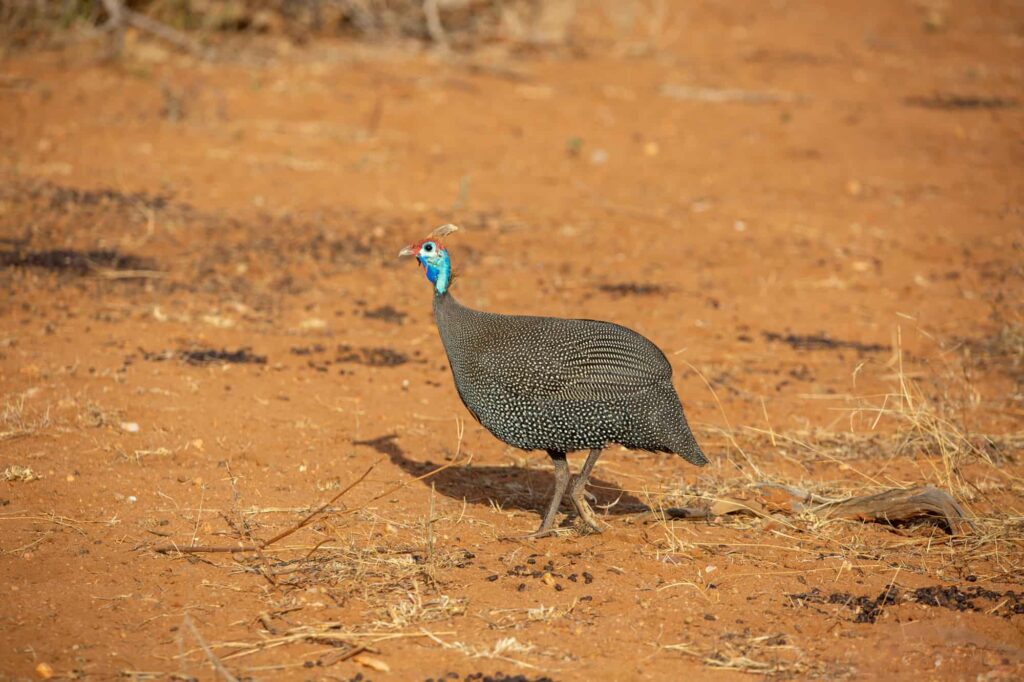
Final Overview
Kruger National Park offers world-class birding shaped by diverse habitats, seasonal migration, and excellent accessibility. From colorful summer migrants to iconic raptors and rare northern specials, the park rewards patience, curiosity, and careful observation.
A birding safari in Kruger reveals a quieter, more intricate side of the African wilderness, where every call, movement, and silhouette adds depth to the safari experience.